April 12, 20097 Comments

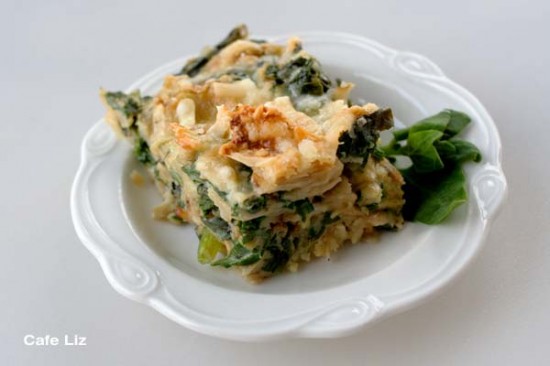
Mina (Passover spinach pie)

mina-spinach-pie1

This is another family recipe that simply means Passover to me. My mother learned this recipe from her Turkish grandmother and aunts growing up in Brooklyn. Apparently the word mina means pie in Judeo-Spanish (commonly known as Ladino), and the proper name for this recipe is actually mina de espinaka — spinach pie. My family seems to have shortened the name to mina, since we don’t really make any other kinds of traditional Turkish pies.

Believe it or not, my mother’s recipe calls for canned spinach — by the time my mother was a child, her grandmother had already switched to prepackaged convenience. I’m lucky enough to have an easy supply of fresh spinach, which I use instead — I get no strange flavors from the can or the freezer, and this is probably closer to how this recipe was made back in Turkey for generations (or so I’d like to believe).

Like all family recipes, this one was handed down to me without any actual measurements. So these are the quantities I use, and my preparation style.
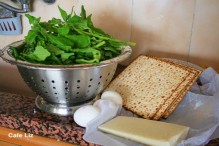
mina-ingredients2-2008
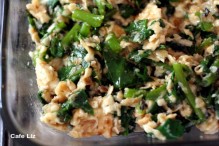
mina-without-cheese-topping
mina-with-cheese-topping2
mina-baked1

For one 9-by-13-inch pie:

700 grams fresh spinach (or canned or frozen)
6 sheets matzo
6 medium-sized eggs
150 grams grated Parmesan and/or Romano cheese, divided into 100 grams and 50 grams
1 teaspoon salt
1/2 teaspoon pepper
Oil

Roughly chop the spinach, put in a pot, and pour hot water on top, enough to make the spinach wilt. Don’t cover the spinach in water.

Meanwhile, crumble the matzo into the pot with the spinach. Let the matzo absorb the water, and dump the mixture into a colander to drain out any extra fluids.

(If you’re using canned spinach, put the crumbled matzo in a bowl and the spinach in a colander above the matzo, and let the liquids drain into the bowl. Once the matzo is fully saturated, drain out the extra liquid and mix the spinach with the soaked matzo.)

Mix the eggs, 100 grams cheese, salt and pepper with the spinach and matzo.

Oil a 9-by-13-inch baking dish, and spread the mixture into the dish. Sprinkle the remaining 50 grams of cheese on top. Drizzle oil on top of the cheese — I like using good olive oil here, even though the original recipe calls for merely a neutral cooking oil. The oil will make the top of the mina turn golden and crispy.

Bake at 180 degrees Celsius until set, about 25 minutes. The top layer should be a light golden brown.

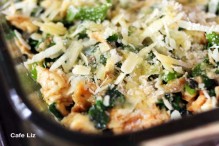
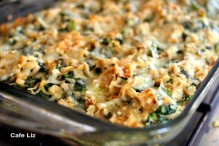
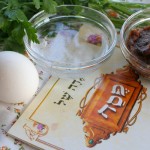
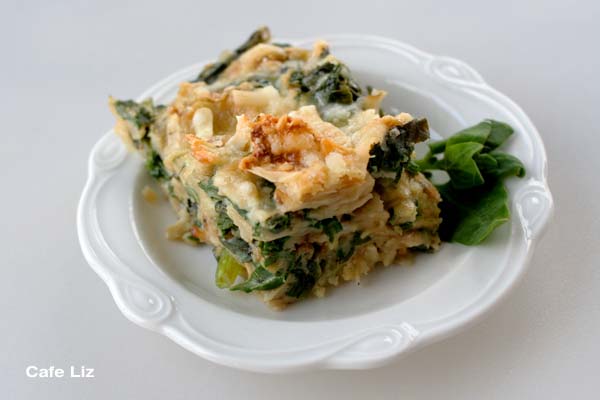
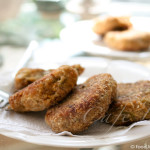
(Photos: The ingredients, the mina mixture without the cheese topping, the mina with the cheese topping, and the mina right out of the oven.)
Related Posts:

|

7 Comments »

Have something to say? Tried a recipe and liked it, or want to suggest a variation? You're invited to post it here. RSS feed for comments on this post. TrackBack URI

  1. Hi Liz, Great stuff. You refer to both Parmesan and Romano cheese. Which do you use?

    Comment by Avi — March 22, 2010 #

  2. Hi Avi, thanks for catching that. I tend to use whichever one I have around the house at the moment. You can use whichever you prefer, or a mix.

    Comment by Liz — March 22, 2010 #

  3. ok cool. Ive had/made similar recipe but added nutmeg and served with some lemon.

    Comment by Avi — March 22, 2010 #

  4. Interesting. Haven’t seen those twists before. Thanks for mentioning it :-)

    Comment by Liz — March 22, 2010 #

  5. Liz, this dish came out great! I used less spinach (400 grams), and it seemed like more than enough. I also used three types of cheeses–Tsfatit, Parmesan and Emek. It was a hit at our picnic today. And my mother-in-law was excited, as her mother used to make it too (in Yugoslavia). Thanks so much!

    Comment by Julia — March 31, 2010 #

  6. [...] enjoyed some fresh peas and broiled asparagus alongside the stew, as well as this spinach matzah pie made with whole-wheat matzah.  Josh called the pie a more portable form of matzah-brei, his [...]

    Pingback by Pass-more-over « Drink of Water — April 3, 2010 #

  7. [...] Liz has a nice list of recipes, with the biscotti, bimuelos and the spinach mina looking especially intriguing. And don’t miss her post-Pesach Mimouna post on [...]

    Pingback by Passover Recipes: What Everyone Else Made « Pragmatic Attic — June 1, 2011 #

Leave a comment

After you submit a comment, it should appear above, even if it's been held for moderation. If it doesn't appear, that means it's been pegged as spam. Please contact me directly to let me know.

In order not to get falsely pegged as spam, if you're a first-time commenter, please don't post anything that looks like a form letter, or include links (you can write out the name of the web site, or send links to me in a message, and I'll add them to your comment).

XHTML tags that can be used: <a href="" title=""> <abbr title=""> <acronym title=""> <b> <blockquote cite=""> <cite> <code> <del datetime=""> <em> <i> <q cite=""> <strike> <strong>

Cafe Liz: Kosher vegetarian recipes, Israeli food culture, a mix of the Mediterranean and the Middle East.

All content and photos copyright 2008-2012, Liz Steinberg. All rights reserved. Please seek permission before republishing.
Powered by WordPress with theme based on Pool design by Borja Fernandez.

All content and photos copyright 2008-2012, Liz Steinberg, at Cafe Liz (food.lizsteinberg.com). All rights reserved. Please seek permission before republishing.