
Where to buy food in Tel Aviv
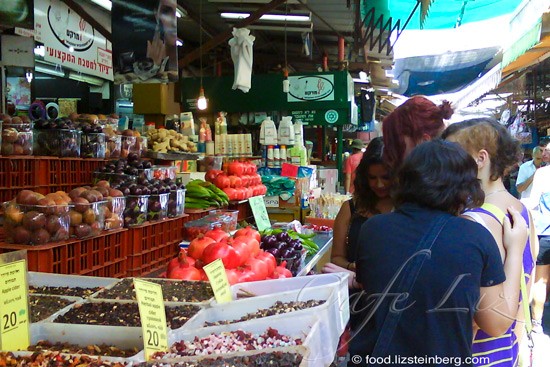
We’re in the midst of the largest social protests in decades. At the center of it all is the cost of living — the economy is powering ahead, but people are being left behind. We pay high monopoly taxes, and consumers are starting to realize that. Banks, supermarket chains, communications companies, baby products — they’re all raking it in, with hefty profit margins beyond what’s internationally accepted. One recent Facebook initiative calls for a 1-week boycott of the largest supermarket chain, Super-Sol, starting today.
But consumers also have themselves to blame for a lot of this. True, in some industries the cartel dynamic is so strong that there’s no way around it (If anyone has figured out a way to get around these bank fees that you won’t find anywhere else in the Western world, I’m all ears) and in some places people lack choice (One commenter on the Super-Sol boycott page noted that it was the only grocery story in her town, Mitzpe Ramon) but ultimately, the large majority of Israel’s residents live in the center of the country. When it comes to food, we have lots of choices.
Now, I guess I support the Super-Sol boycott, although I disagree with the approach. What’s a one-week boycott? I’ve been de facto boycotting the store for the past several years. Ditto for Super-Sol’s competitor, Mega (Blue Square). I do only minimal shopping at grocery stores, including Teva Castel, Eden Teva Market and 24-hour chain AM:PM (where I buy price-controlled things like bagged milk and flour). Even at my favorite grocery store, Nitzat Haduvdevan, where prices are quite competitive, I buy only things I can’t get at the market, like seaweed and buffalo yogurt (these products are cheaper there than at Teva/Eden Teva).

How is this possible? Tel Aviv, the mother of all expensive cities, has three major markets. Plus, there are plenty of smaller stores that offer better prices than the chain groceries. This might sound counter-intuitive to anyone used to shopping in a Western country, but the smaller, independent stores are the ones who are really competing for your business; the chains use their market power to jack up prices, not to let you pay less through their economies of scale.
If you’re not used to shopping at markets, it might sound like extra effort. More than effort, I think it just takes some advance planning — but unless you buy all your food at the store under your house, you probably plan your food purchases as it is. The farther away the store or market, the more food you buy. Plus, there are never any lines at markets — I can’t stand waiting 15 minutes to be checked out at the neighborhood Super-Sol.
Plus, I encourage you to get to know the independent neighborhood stores — not the convenience stores, but the older mom-and-pop operations. You might find some good prices.
So, here’s how my purchases break down. Sure, I sometimes break my own rules and buy more than milk at Super-Sol, but this is how I do most of my shopping.
Shortcuts for the rest of the post:
Let me make one thing clear: I would shop at these places even if they didn’t offer better prices than the supermarket chains. They offer good quality and an excellent selection of products. Plus, I like supporting small, independent businesses and interacting with the merchants, most of whom are knowledgable and passionate about their wares.
You might argue that these options don’t work for you, since I’ve found stores in places that I pass regularly, but that the point is that I make the effort to buy vegetables, say, next to my office and not near my house. You, too probably pass cheap stores during your daily activities. And if you’re choosing to shop at the big chain stores despite it all, this is how much you’re paying for the privilege.
Savvy shoppers: What staple products have I left off this list? Any tips you’d like to add, for Tel Aviv or elsewhere in Israel? What are your tips for eating well while avoiding absurd prices? Let me know in the comments.
About the price comparisons: I observed the following prices at the Carmel Market and Levinsky Street Market on August 28, and at Super-Sol (Arlozoroff branch), Mega (Ibn Gvirol/London Ministore branch) and Nitzat Haduvdevan (Ibn Gvirol branch) on August 29. I also checked prices for Super-Sol and Mega via grocery price comparison site Hasuper, but online prices were consistently lower than what I found in the physical stores. As for the argument that these chains have cheaper branches outside Tel Aviv, well, there are plenty of stores/markets offering lower prices within Tel Aviv, some of them only a block away from the supermarkets I checked. Also, I didn’t include prices from Eden Teva Market or AM:PM, because I haven’t found a single instance in which they’re cheapest. (UPDATE: Between 2 p.m. and 3 p.m. on Friday afternoons, Eden Teva Market sells its organic vegetables for half off, which often brings prices in line with those at the shook.) I also am not including Victory (Ahad Ha’am 30), a “discount chain” that just opened in Tel Aviv — the prices there are a shekel or two cheaper than at other grocery stores, but they’re still higher than at the markets, and you need to buy in bulk in order to get the lower prices. (Where exactly should I be putting all those jars of mayonnaise in my tiny Tel Aviv apartment?) (UPDATE: For things like flour, sugar and milk, Victory does undercut every other store in Tel Aviv.)
Finally, I knew the grocery stores were expensive, but since I don’t regularly shop there, I didn’t realize just how bad it was until I conducted this comparison. The prices I found shocked me.

Fruits and vegetables: The Carmel Market. I go once a week to stock up on fresh produce, including seasonal fruits, salad basics like tomatoes and cucumbers, a large selection of fresh herbs, and vegetables for cooking like potatoes, onions and eggplant. If I need to buy vegetables in the middle of the week, I go to Shook Ha’aliyah (corner of Wolfson), a vegetable shop on Ha’aliyah Street that happens to be on my way to work. There are at least three vegetable shops clustered in that area, all with excellent prices. Sometimes I go to the farmer’s market at the Tel Aviv Port for fun — some of the prices there are decent, others are less so, but generally you can find some unusual products. Mind you, if the prices at the markets seem too expensive, that means the fruit or vegetable you’re looking at is probably not in season. You’re best off finding a seasonal alternative.
Some example price comparisons:
| Carmel Market | Super-Sol | Mega | |
|---|---|---|---|
| Tomatoes | NIS 2-7 a kilo | NIS 10 | NIS 7 |
| Cucumbers | NIS 2-3 per kilo | NIS 5 | NIS 4.50 |
| Red lettuce | NIS 4 a head | NIS 7 | |
| Parsley | NIS 2 a bunch | NIS 4 (smaller than market bunches) |
NIS 5 (also smaller) |
| Peaches | NIS 7-12 per kilo | NIS 13 | NIS 13 |
| Plums | NIS 4.50-10 per kilo | NIS 13-17 | NIS 16 |

Grains, legumes, nuts and dried fruit: Levinsky Street Market. There are lots of stores with different kinds of rice, beans and dried goods. Prices tend to be within the same range, though definitely shop around if a shekel or two matters to you. I even bring my own plastic bags. There are also some stores at the Carmel Market. One of the best ones there is Amrani Spices (Hacarmel 15). Health food store Nitzat Haduvdevan also offers pretty competitive prices.
Some example price comparisons:
| Levinsky | Nitzat Haduvdevan | Super-Sol | Mega | |
|---|---|---|---|---|
| Orange lentils | NIS 12 per kilo | NIS 10 | NIS 14.29 | NIS 13.50 |
| Persian rice | NIS 8-10 per kilo | NIS 7 (Jasmine) | NIS 10-20 | NIS 10 |
| Oatmeal | NIS 8 per kilo | NIS 6.50 | NIS 26-32 | NIS 27-33 |
| Popcorn | NIS 8 per kilo | NIS 8 | NIS 17 | NIS 12 |
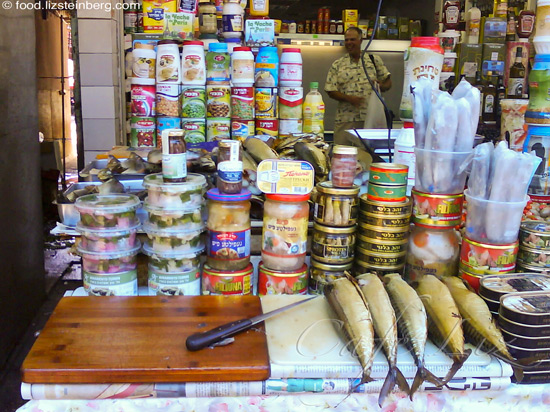
Other packaged goods, like pasta, vegetable oil and tomato paste: Whole-wheat pasta I get at Nitzat Haduvdevan — it’s a relatively expensive product, yet it’s still cheaper than regular pasta at the neighboring mass-market supermarkets. Regular pasta I generally get at Levinsky or the Carmel Market. The dried-good stores at the markets sell a range of packaged food products, and you’re better off getting whatever you can there, and not at a grocery store.
Example price comparisons:
| Levinsky/Carmel Market | Victory “discount” grocer | Super-Sol | Mega | Nitzat Haduvdevan | |
|---|---|---|---|---|---|
| Ptitim (Israeli couscous, 500-gram bag) | 3 for NIS 10, or NIS 4 each | 4 for NIS 20 | NIS 7 | NIS 7.5 | |
| Pasta (500 grams) | 3 for NIS 10-11 | NIS 7+ | NIS 8+ | NIS 6.5 (organic AND whole wheat) |

Dairy products: I buy unaged white cheeses, including cream cheese, Bulgarian cheese and Tsfatit, from stands in the Carmel Market. Occasionally, I’ll also buy harder cheeses, such as Gouda or Roquefort, and butter. The butter is around 3 shekels per 100 grams, the same price you’ll pay at the grocery store (packaged butter is price-controlled), but for some reason it has more flavor — the grocery store stuff is flavorless if you ask me. Stores include Maadanei Hacarmel in the Carmel Market (corner of Havshush), and Hahalban at Levinsky (corner of Hahalutzim). I buy 1-liter tubs of buffalo yogurt for 25 shekels at Nitzat Haduvdevan. Finally, I buy liter bags of milk and cartons of cream at a grocery chain, generally AM:PM. The milk bags are price-controlled and the current price is NIS 5.03.

Eggs: We buy organic, from Nitzat Haduvdevan. But you can get regular eggs from any supermarket, since they’re price-controlled. Currently it’s NIS 11 for a dozen medium-sized eggs, NIS 12.15 for large, and NIS 13.25 for extra large. Some eggs are marketed as “extra fresh” or “omega-3 enhanced,” so look out — they’ll cost more.
| Nitzat Haduvdevan | Mega | |
|---|---|---|
| 12 large organic, free-range eggs | NIS 17.90 | NIS 28 |

Bread: The only bread we regularly buy is pita, generally from Falafel Gina across from my office. At NIS 13 for 10 regular pitas and NIS 20 for whole-wheat, they’re not the cheapest, but they’re excellent — large, fluffy and elastic. (And surprise surprise — they’re also no more expensive than the pitas at Mega, which don’t look nearly as fresh.) At the Carmel Market, I recommend the Maafeh Habalkan bakery at the bottom of the market, on the road alongside the Carmelit/parking lot. There, pitas are NIS 9 for 10. I don’t recommend buying bread from any vendors who aren’t visibly next to a bakery. Note: Fresh bread keeps best if you freeze it immediately.
Olive oil: I like shopping at Oded’s at the Levinsky Street Market (Levinsky 57, corner of Hahalutzim), where they fill up my 1-liter bottle for NIS 53. Admittedly, it’s not the cheapest; you can get 1 liter from Pereg across the way (Levinsky 46) for about NIS 40. Also, I hear that the new Olia at the Carmel Market will also fill a 1-liter bottle for NIS 40 (Hacarmel 7). I also buy 1.5 liter bottles of olive oil for cooking at the Carmel Market, from my olive guy (Yehya Kapah, between Daniel and Simtat Hacarmel; it’s great oil, and you could use it on salads, too). Current price is about NIS 30 for a plastic soda bottle’s worth.
| Levinsky | Carmel Market | Super-Sol | Super-Sol | |
|---|---|---|---|---|
| 1 liter olive oil | NIS 39-55 | NIS 20+ | NIS 50-60 | NIS 50 |
Coffee: I buy my coffee beans from a few places. Top on the list is David’s at the Levinsky Street Market (Levinsky 49), where prices range between NIS 6 and NIS 14 per 100 grams. Other roasters include Stern’s (Hacarmel 33, currently undergoing renovations) and Cohen (Yishkon 32) at the Carmel Market, which are a bit more expensive. If you buy from a coffee store chain, you’ll be paying NIS 18. At grocery stores, black coffee starts around NIS 7 per 100 grams, and coffee is generally sold vacuum-packed in large bags, not by weight.
| Levinsky | Super-Sol | Mega | |
|---|---|---|---|
| 100 grams coffee beans for espresso | NIS 4-12 | NIS 8-16 | NIS 8-20 |
Chocolate: Buying in bulk matters! I get 1 kilo at a time from Haik Conditoria (Hahalutzim 12, open until 4 P.M.), off the Levinsky Street Market. Prices range from NIS 40 a kilo for white chocolate to NIS 55 a kilo for 73% cocoa dark chocolate. Technically, it’s baking chocolate, but we just eat it — it’s better quality than most chocolate bars. At the supermarkets, chocolate costs a minimum of NIS 40 per kilo; 73% dark chocolate starts around NIS 100 per kilo.

Spices: I usually buy at Pereg in the Levinsky Street Market (Levinsky 46). Otherwise, I’ll go to the stores at 31-33 Yom Tov Street (between Rabbi Meir and Yishkon) parallel to the Carmel Market. There’s also Amrani (Hacarmel 15) for spices and a huge range of teas made from dried fruit, herbs and spices (“halitot” in Hebrew). In most cases, I usually buy 50 grams at a time, because I like finishing my spices (and teas) quickly and buying new ones, not letting them sit on my shelf for years, losing flavor.
Alcohol: I usually buy wine or liquors from one of the shops on Ha’aliya Street. I generally go to Mashkaot Eliezer (Ha’aliya 42). The sale prices at Eden Teva Market are higher than regular prices at Eliezer — how ridiculous is that? There’s a liquor store Mivhar Mashkaot near my house (Ibn Gvirol 97), and their prices are generally pretty good too; they also have a nice range of local craft beers. By the way, out of all the prices I observed for this post, the prices I found for the arak shocked me most — Mivhar, Super-Sol and Mega are all within 2-3 blocks of each other in North Tel Aviv, and Mivhar has a nicer shopping atmosphere and clearly doesn’t have an economy of scale.
| Mivhar | Eliezer | Super-Sol | Mega | |
|---|---|---|---|---|
| Yarden Hermon white/red wine, 2010 | NIS 39 | NIS 45 | NIS 43 | |
| El Namroud arak | NIS 55 | NIS 55 | NIS 70 | NIS 80 |

Imported Asian products and tofu: I buy tofu a kilo at a time from East West at the Carmel Market (Hacarmel 17). It’s currently 25.10 a kilo, and this is the only place I’ve found selling it in these quantities and at this price. (UPDATE: Yael adds that the Asian shop at Levinsky has tofu for NIS 18 per kilo. Great find!) I also buy specialty products like soy sauce, coconut cream, seaweed, rice noodles, sesame oil, pickled ginger and dried galangal from East West or Nitzat Haduvdevan — East West is the importer, but Nitzat Haduvdevan is sometimes cheaper. Worthy of note are East West’s noodles by the weight in the bins next to the door.
| East West | Nitzat Haduvdevan | Super-Sol | Mega | |
|---|---|---|---|---|
| Soy sauce (1 liter) | NIS 8-40, depending on quality |
NIS 27-40 (or more for organic) |
NIS 60-100 | NIS 28 |
| Coconut cream (can) | NIS 8.50 | NIS 7.50 | NIS 10 |
Specialty flours: I get flours including buckwheat, spelt and rye from Nitzat Haduvdevan. I buy 00 pasta flour from Eden Teva Market — it’s the only place I’ve found that carries it.
Fish: For non-vegetarians, Dagim Eli at Yom Tov 7 (closed Sundays) comes recommended by a chef. Don’t be put off by the smells of the neighboring meat stands; this place is perfectly clean. You can ask them for sushi-grade fish, and if they don’t have anything fresh enough, they won’t sell it to you. They also have live fish that they slaughter on the spot (if that bothers you, then maybe you shouldn’t be eating fish at all). The advantage is not just price; I think most of the supermarkets carry only frozen fish, not fresh.
Meat: I asked a friend who runs a restaurant in the Yemenite Quarter where she shops. She finds some of the meat stands in the Carmel Market to be unsanitary — confirming what many of us have suspected — and says some of them also forge their Kashrut certificates. Eek. She recommends two places: For chicken, she goes to the large store at the corner of Simtat Hacarmel and Yihya Kapah. For beef, she goes to a small stand called Atliz Benny — if you’re on Yom Tov, the street parallel to the Carmel Market and the main street for meat shops, it will be the second-to-last store on your right before Yom Tov dead-ends at Simtat Hacarmel. The front display case is silver metal up to the height of your chest. Other friends of mine go to small butchers around town, because the supermarket meat just doesn’t look that fresh to them.
Processed food, like vegan burgers: We don’t buy them! I make as much as I can myself. But seriously, you can get a great range of salads at the delis at Levinsky and the Carmel Market. They’re fresher than most of what you’ll find at the supermarkets. And things like vegan burgers — I make them myself. Sure, it takes a bit more time, so you make them in bulk, and you also have complete control over the ingredients. A dozen homemade vegan burgers costs me about NIS 5-10 in ingredients plus half an hour of work; store-bought Tivall are around NIS 35 per 750‫-‬gram package (which is significantly less than my dozen burgers weigh).

Cookware: Here, too, the smaller, less impressive shops tend to have similar things for better prices. I shop at Sigris at Ibn Gvirol 11, the stores at the Carmel Market, and the handful of small cookware shops on Nahlat Binyamin between Ha’aliya and Levinsky. You can get all sorts of great stuff at those shops, from metal and glass cooking bowls, top-quality glass storage containers, peelers and strainers to more special things like couscous screens and jachnun pots. If I’m looking for a specialty item and I can’t find it at these places, I’ll go to Tischler’s (Montefiore 22), a well-stocked independent store with some of the best prices in town, or 4 Chef (Nahalat Binyamin 100 or Carlebach 11). Both these stores have a great range of higher-end cookware. Sometimes I buy stuff online from Amazon or eBay, such as bamboo strainers or cupcake papers. When it comes to price-gouging, the chain Caserola is a major offender — I bought an oven thermometer at Sigris for NIS 32; at Caserola the exact same thing was about NIS 60. I bought a basic mandolin for NIS 40 at the Carmel Market; the same product was NIS 110 at Caserola and 4 Chef.
More on food prices in Israel:
- Food prices are up 30% in five years (TheMarker)
- Importers say supermarkets are marking up imports by hundreds of percent (TheMarker)
- Background about how the protest began, with cottage cheese (JTA)
- Basics may not be more expensive than in other countries, but everything else is (Haaretz)
- List of government price controls for food products, in Hebrew (Industry and Trade Ministry website)
Related:


