Greens of the season: What’s in your yard, what’s in the market — and what’s off-limits

February 24, 2010 at 12:00 am | Tags: , , , , , , , , , , , , ,

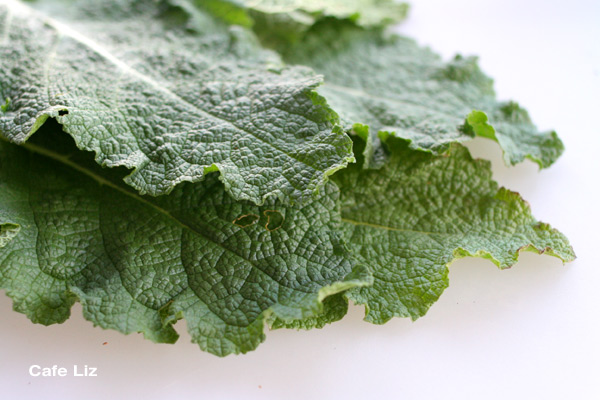
Saineh, otherwise known as lashon hapar

The winter rains bring with them an explosion of green growth, much of which filters its way into our markets -- well, some of them, at least. For whatever reason -- wealth? -- many of the wild greens do not play a role in most people's diets. And it's a pity, because native plants are an excellent way to embrace the land, eating local at its best.

However, you can still find them. A few of them may be in your yard, or growing alongside parking lots, or next to roads. Well, any of them could be there -- these are wild plants, after all. But you can save yourself the trouble (and potential danger) of identifying them yourself by buying them after someone else did the foraging -- Arab and interracial locales, as well as less well-off places, are a good bet for this.

There's a potential catch, though. Some plants that have been part of the culinary tradition for hundreds of years are now protected by law due to overpicking, but they're still being sold in the markets. Most likely it's a matter of ignorance. However, there's a reason they're protected -- they've become endangered by the harvesting habits, which in many cases prevent them from reproducing.

Here's a list of what's what -- the plants I've identified around my house (mallow, sorrel, nettle), the delights in various markets (wild beet, chicory, mustard, and Jerusalem sage) a few that were there but shouldn't be (cyclamen, tumbleweed). Last but not least -- some simple recipes that highlight the vibrant freshness of the season.

But before we begin, a warning: If you're not 100 percent sure you know what you're picking, don't eat it. People have died over misidentifications. At the very least, this guide will give you the satisfaction of knowing what's in your yard. Knowing how to identify the urban flora makes your environment a little bit more familiar -- especially when you see your friend the mallow bush peeking out at every opportunity.

Now, let's go. Continue reading Greens of the season: What’s in your yard, what’s in the market — and what’s off-limits...

Bookmark and Share

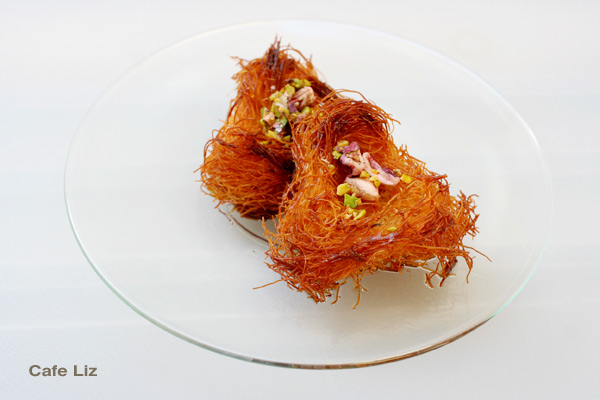
Purim special: Hamentaschen-shaped bird’s nest baklava

February 20, 2010 at 8:00 pm | Tags: , , , , , , , ,

Purim is approaching, and while I haven’t decided on a costume, I did decide to dress up my hamentaschen in Middle Eastern outfits. Hamentaschen are traditional Ashkenazi Jewish cookies notable for their three-pointed form, which according to tradition resembles the three-cornered hat of Haman, the holiday’s antagonist. (In Hebrew, for some reason, they’re called oznei haman, or “Haman’s ears.”) Last year I dressed up my hamantaschen as Japanese-inspired mochi cookies, this year I they resembled Middle Eastern pastries.

The Purim story is set in first-century Persia, so it’s unlikely that Mordechai, Esther or Haman ever had baklava. While the Persians (or Ottomans) are thought to have invented baklava, filo came into being only somewhere between the 6th and the 10th centuries. But still, it’s a twist that makes me smile. Continue reading Purim special: Hamentaschen-shaped bird’s nest baklava…

Bookmark and Share

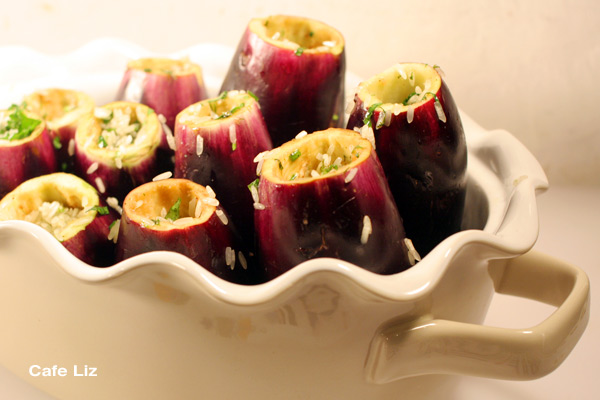
Eggplants stuffed with herbs and rice

February 16, 2010 at 10:00 pm | Tags: , , , , , , , ,

Here in the Levant we like to stuff things. It’s a habit picked up by all the places that used to be part of the Ottoman empire and its neighbors. Because rice is never so good as when it’s cooked packed inside a vegetable, and picks up its flavors and aroma during cooking.

Since stuffing isn’t limited only to peppers, which are born hollow and ready to be stuffed, there are special tools to help with the job. Previously I used a paring knife, but inspired by Sarah and Miriam’s posts on Nazareth, I picked up a special hollowing tool, for seven shekels (Photo after the jump). I got it from a little store on Jaffa’s Jerusalem boulevard, where the shopkeeper showed me an Egyptian pound someone had passed off as 10-shekel coin earlier that day — both have a bronze disc surrounded by a silver border, except the pound has a picture of a pharaoh and is worth, um, about 1/20th of a 10-shekel coin. Continue reading Eggplants stuffed with herbs and rice…

Bookmark and Share

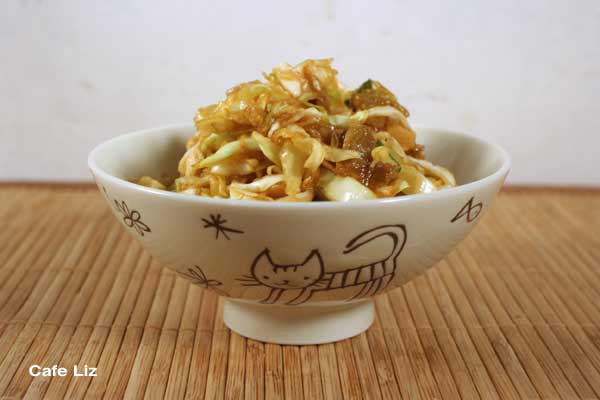
Cabbage salad with soy sauce and raisins

February 11, 2010 at 2:00 am | Tags: , , , , ,

This cabbage salad is simple, quick and generally popular — as are most sweet, salty things. As the cabbage absorbs the soy sauce and vinegar, it wilts and softens. As a bonus, this is one salad that can be left in the fridge for a few days, to no ill effects. It’s supposed to be wilted, after all. Continue reading Cabbage salad with soy sauce and raisins…

Bookmark and Share

Spiced wine with quince and roses

February 7, 2010 at 1:00 am | Tags: , , , , ,

People, believe it or not, I've found a use for kiddush wine. For those who have never had it, it's a traditionally sweet wine to represent the sweetness of blessings, but there's just so much sweetness a person can handle until terms like cloying and sickly come to mind. But add some spices and fruit, and heat it up, and it's actually quite nice. There you have it, mulled wine, no sugar added. Good for the cold weather, too.

A few weeks ago, I had the honor of attending a Tel Aviv food blogger meet-up. Yael of Oranges and Honey (in Finnish), Irene of Irene Sharon Hodes, Sarah of Foodbridge, Michelle of Baroness Tapuzina and Miriam of Israeli Kitchen and I met at Mazzarine in Tel Aviv for dinner (see my previous review). The management had caught wind of our nature, and sent over a handful of offerings on the house, along with the new chef. Culinary highlights: I quite liked the foccaccia and the mustard mayonnaise; chef Sharon Artzi, who had been there a week at the time, told us he planned to renovate the menu with new dishes; and the mulled wine that closed our meal was excellent. A traditional Scandinavian holiday drink, as Yael pointed out. (Non-food highlight: Have you ever been out to eat with six people who all get up and methodologically photograph every dish? It's nice to be with like minds.)

Along with cubes of fresh fruit, Mazzarine added a few dried rosebuds to their mulled wine, and while they don't add a prominent flavor, they make a nice visual touch.

Now, you could make mulled wine from slightly better stock, but why bother? I've never exactly been a wine connoisseur, and in any case, why ruin something that's worth drinking on its own? And who doesn't have a random, unwanted bottle of kiddush wine sitting around? Continue reading Spiced wine with quince and roses...

Bookmark and Share

Black bean soup with citrus

February 1, 2010 at 1:00 am | Tags: , , , , , , ,

It’s a simple black bean soup, but with a citrus tang — from oranges, kumquats or both. I first encountered a similar recipe about 10 years ago, and while I’ve long since forgotten which cookbook it was in, the mix of flavors has etched itself a place in my mind.

Most such recipes call for orange juice, but I see no reason not to throw in the whole fruit — the zest goes in during the cooking stage, then I remove the white pith, and blend the flesh into the cooked soup. It’s like juice, but with extra fiber.

Kumquats also make an excellent addition, as the sweet little balls of zest are in season, too. I added a few sliced up as garnishes to the finished soup, kind of like fruity croutons, but you could substitute them for the oranges entirely, if you want. Continue reading Black bean soup with citrus…

Bookmark and Share

All content and photos copyright 2008-2010, Liz Steinberg. All rights reserved. Please seek permission before republishing.
Powered by WordPress with theme based on Pool design by Borja Fernandez.
Entries and comments feeds. Valid XHTML and CSS. ^Top^