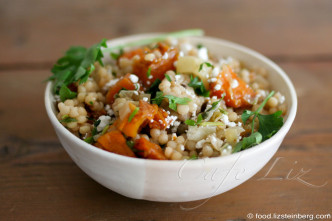
Grape leaves stuffed with mozzarella and sheep cheese

January 23, 2010 at 11:00 pm | Tags: , , , , , ,

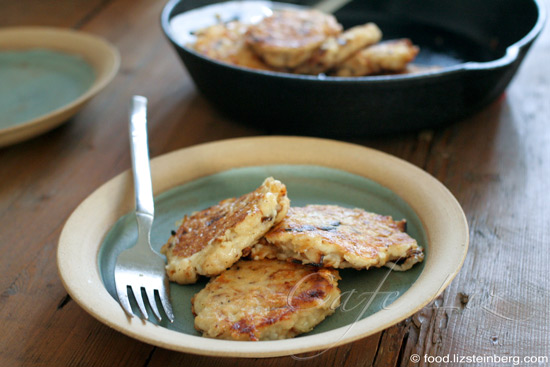
Why restrict your grape leaf stuffing to rice alone? Rice or other grains are traditionally the base for many a stuffed grape leaf, perhaps because they swell up during cooking to make the leaf dumpling round, fat and firm. But that’s no reason not to expand into more unusual territory. Cheese, for instance.

I got the initial idea for this recipe — if you could call two ingredients a recipe — from a restaurant in Bat Shlomo, which serves cold grape leaves wrapped around a firm labaneh. Call me immodest, but I have to say that my version is way better — there’s no cold cheese that can compare to warm, gooey mozzarella. I’d know, since I probably ate about half of my grape leaves while photographing them. Continue reading Grape leaves stuffed with mozzarella and sheep cheese…

Bookmark and Share

Pasta sauce with mallow and sheep cheese

January 17, 2010 at 1:00 pm | Tags: , , , , , , , , ,

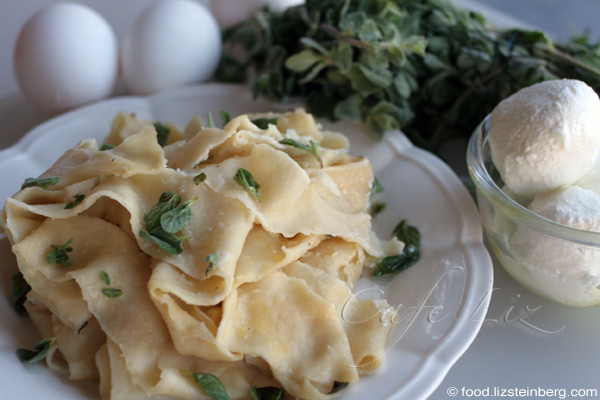
It doesn't sound like the most unusual dish -- tomato sauce with greens and cheese, pretty standard, right? Well, it is and it isn't. My greens happened to be mallow and wild beet, and my cheese was a traditional Arab sheep cheese known as "jibneh," which, quite creatively, means "cheese" in Arabic. Ingredients you wouldn't usually find in pasta sauce, yet it's the basic mix of greens and cheese. It works.

Wild beet and mallow are among the many wild greens that happen to be in season right now. They can be found in abundance in parks, Arab markets and possibly even your yard. Mallow is called halamit in Hebrew, but is known more popularly by its Arabic name, hubezah. The mallow plant gave its name to the marshmallow, and also the color mauve -- mauve is the French name for the plant, whose flowers happen to be, well, mauve. Continue reading Pasta sauce with mallow and sheep cheese...

Bookmark and Share

Restaurant review: Lunch at Bat Shlomo’s Schwartzman dairy

December 22, 2009 at 2:00 pm | Tags: , , ,

Every so often, us city dwellers get a craving for a little bit of country, and go scouring the countryside for a place that meets our bucolic idyll.

One such place is the Schwartzman family dairy on Moshav Bat Shlomo, a few kilometers north of Zichron Yaakov. The dairy sits in an 100-year-old stone house on South Bat Shlomo’s only street (one street!). You walk beneath the canopy of trees and enter an unassuming yard full of bric-a-brac, clay pots, Hebron glass and a chicken coop. There you’ll find a small store, and a little seating area for the “restaurant.” Massive clusters of garlic hang everywhere.

As soon as we entered the store, we were bombarded with little slivers of cheese — taste the sfatit, taste the aged goat cheese, here’s a scoop of labaneh and one of yogurt. After all, you’re probably there for the cheese, because this is a dairy, after all, and cheese is the main thing on the restaurant menu. Continue reading Restaurant review: Lunch at Bat Shlomo’s Schwartzman dairy…

Bookmark and Share

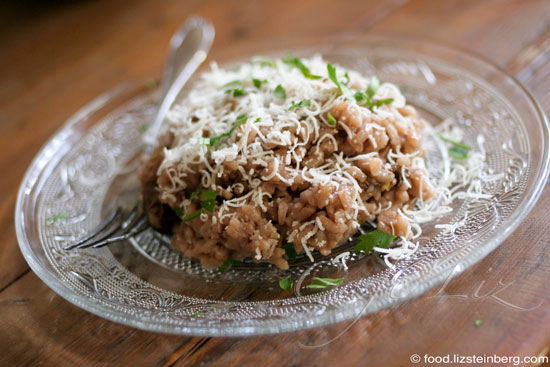
Green beans with sherry and Romano

July 19, 2009 at 1:00 am | Tags: , , , , ,

green-beans

These green beans have no one dominant flavor. Rather, everything blends together — sherry, garlic, basil and Romano cheese. It simply tastes good.

The beans have a special, wrinkly texture from being fried — not pan-fried, but really fried, in lots of oil. I was inspired by this recipe for Chinese-style green beans on Rasa Malaysia.

Anyway, nothing Chinese here — freshly grated Romano cheese, which we bought on our last trip to Italy; a few spoonfuls of sherry from a vacation in Spain (it pains me to do anything but drink my good sherry, but really, you don’t need too much); and some freshly clipped basil from the plant on our patio, flowers and all. Continue reading Green beans with sherry and Romano…

Bookmark and Share

Cross-Mediterranean caprese with fried onions and sumac

July 2, 2009 at 1:00 am | Tags: , , , , , ,

caprese

This version of a caprese salad takes a trip around the Mediterranean: The classic Italian mozzarella and tomatoes, plus Middle Eastern seasonings — fried onions, sumac and cumin.

I used cherry tomatoes (plum cherry tomatoes, to be precise), which tend to be sweeter than regular tomatoes, and thus work very well when tomatoes are the centerpiece of the dish.

Sumac is a burgundy-colored spice with a light tangy flavor. Obviously, this spice is not the same plant as poison sumac or poison ivy; it’s a benign relative. (More information on sumac.) If it’s not something you keep around your kitchen, you could leave it out of this recipe. Most of the seasoning comes from the fried onions anyway. Continue reading Cross-Mediterranean caprese with fried onions and sumac…

Bookmark and Share

White cheese with capers and herbs

June 30, 2009 at 1:00 am | Tags: , , , ,

cheese capers herbs

We are blessed by a wealth of fresh, young cheeses as well as healthy herbs, so I threw all of the above together, along with my home-pickled capers, to make a quick salad.

I happen to have Thai basil and pineapple sage growing quite robustly on my patio. These herbs have different flavors than their more standard counterparts (basil and sage), which you’re more likely to find around here, but any combination of fresh herbs that suits your fancy would be quite good in this dish.

The cheeses — a 50-50 mix of diced mozzarella balls and tsfatit — are from my favorite cheese stand at the Carmel market, which gets them from the Sharon dairy. They’re at their peak for all of two days after purchase, but so good that you won’t want to leave them any longer than that. Continue reading White cheese with capers and herbs…

Bookmark and Share

White asparagus and purple potatoes with emmenthal and fennel

June 16, 2009 at 1:00 am | Tags: , , , , , ,

white asparagus purple potatoes

This mild-flavored dish plays with colors — white asparagus, purple potatoes. OK, maybe for some of you white asparagus isn’t such an oddity, but around here it is. In fact, it’s just beginning to make its presence felt in the market, as I described in a newspaper article. Continue reading White asparagus and purple potatoes with emmenthal and fennel…

Bookmark and Share

Passion-fruit citrus cheesecake

May 27, 2009 at 1:00 am | Tags: , , , , , , ,

passion-fruit-cheesecake1

This cheesecake has a fabulous, tangy flavor, thanks to the passion fruit, orange and lemon. It also almost ended in complete and total disaster due to my impatience.

It’s been quite a while since I’ve made a cheesecake — about 51 weeks, right around last year’s Shavuot, to be precise — and I kind of forgot the importance of letting the cheesecake take its dear sweet time to cool down. In my haste, I removed the baking ring a few minutes after this gorgeous, golden cheesecake came out of the oven, and watched in horror as the perfect top split and the cake collapsed into a pile on its tinfoil wrapping.

Fortunately, not all was lost. Continue reading Passion-fruit citrus cheesecake…

Bookmark and Share

Toasts with loquats, cheese and basil

April 30, 2009 at 1:00 am | Tags: , , , , ,

loquat-toasts3

Quick to put together and fun to eat, these toasts take advantage of the onset of loquat season. I picked up a whole bucket of loquats at the Carmel Market for about 3 shekels a kilo this weekend. Admittedly, they were somewhat bruised looking, hence the price, but that means they’re super-ripe and sweet. Anyway, they actually go very well with cheese and basil. Continue reading Toasts with loquats, cheese and basil…

Bookmark and Share

Mina (Passover spinach pie)

April 12, 2009 at 1:00 am | Tags: , , , , , , ,

mina-spinach-pie1

This is another family recipe that simply means Passover to me. My mother learned this recipe from her Turkish grandmother and aunts growing up in Brooklyn. Apparently the word mina means pie in Judeo-Spanish (commonly known as Ladino), and the proper name for this recipe is actually mina de espinaka — spinach pie. My family seems to have shortened the name to mina, since we don’t really make any other kinds of traditional Turkish pies.

Believe it or not, my mother’s recipe calls for canned spinach — by the time my mother was a child, her grandmother had already switched to prepackaged convenience. I’m lucky enough to have an easy supply of fresh spinach, which I use instead — I get no strange flavors from the can or the freezer, and this is probably closer to how this recipe was made back in Turkey for generations (or so I’d like to believe).

Like all family recipes, this one was handed down to me without any actual measurements. So these are the quantities I use, and my preparation style. Continue reading Mina (Passover spinach pie)…

Bookmark and Share
Next Page »

All content and photos copyright 2008-2010, Liz Steinberg. All rights reserved. Please seek permission before republishing.
Powered by WordPress with theme based on Pool design by Borja Fernandez.
Entries and comments feeds. Valid XHTML and CSS. ^Top^