Greens of the season: What’s in your yard, what’s in the market — and what’s off-limits

February 24, 2010 at 12:00 am | Tags: , , , , , , , , , , , , ,

Saineh, otherwise known as lashon hapar

The winter rains bring with them an explosion of green growth, much of which filters its way into our markets -- well, some of them, at least. For whatever reason -- wealth? -- many of the wild greens do not play a role in most people's diets. And it's a pity, because native plants are an excellent way to embrace the land, eating local at its best.

However, you can still find them. A few of them may be in your yard, or growing alongside parking lots, or next to roads. Well, any of them could be there -- these are wild plants, after all. But you can save yourself the trouble (and potential danger) of identifying them yourself by buying them after someone else did the foraging -- Arab and interracial locales, as well as less well-off places, are a good bet for this.

There's a potential catch, though. Some plants that have been part of the culinary tradition for hundreds of years are now protected by law due to overpicking, but they're still being sold in the markets. Most likely it's a matter of ignorance. However, there's a reason they're protected -- they've become endangered by the harvesting habits, which in many cases prevent them from reproducing.

Here's a list of what's what -- the plants I've identified around my house (mallow, sorrel, nettle), the delights in various markets (wild beet, chicory, mustard, and Jerusalem sage) a few that were there but shouldn't be (cyclamen, tumbleweed). Last but not least -- some simple recipes that highlight the vibrant freshness of the season.

But before we begin, a warning: If you're not 100 percent sure you know what you're picking, don't eat it. People have died over misidentifications. At the very least, this guide will give you the satisfaction of knowing what's in your yard. Knowing how to identify the urban flora makes your environment a little bit more familiar -- especially when you see your friend the mallow bush peeking out at every opportunity.

Now, let's go. Continue reading Greens of the season: What’s in your yard, what’s in the market — and what’s off-limits...

Bookmark and Share

Hatikva market — the other side of Tel Aviv

January 27, 2010 at 7:00 pm | Tags: , , ,

I don't usually feel like a stranger in my own city. I observe minute changes in the scenery as they occur, and I probably could get around with my eyes closed, that is, if I weren't afraid of walking into a tree or getting hit by a car. Yet there are neighborhoods I don't know very well, and even some where I've never been. Hatikva was one of them.

The neighborhood happens to have a great market, and countless restaurants. It also happens to be the Tel Aviv neighborhood with the worst reputation, one of crime and poverty. But not surprisingly, it's not a bad place at all. In fact, it's a pretty decent place. I could think of at least one Tel Aviv neighborhood that is way grosser than the wrongly defamed Hatikva quarter (ahem, central bus station).

This may be part of the reason that the prices in Hatikva are so reasonable -- to the residents' dismay, the area doesn't have the same draw as yuppified Neve Tzekek, or even the Carmel market and the many Yemenite restaurants nearby.

In fact, the Hatikva market is wider and cleaner than Tel Aviv's more popular Carmel market, thanks to a 2005 renovation. Huh. Continue reading Hatikva market — the other side of Tel Aviv...

Bookmark and Share

Pasta sauce with mallow and sheep cheese

January 17, 2010 at 1:00 pm | Tags: , , , , , , , , ,

It doesn't sound like the most unusual dish -- tomato sauce with greens and cheese, pretty standard, right? Well, it is and it isn't. My greens happened to be mallow and wild beet, and my cheese was a traditional Arab sheep cheese known as "jibneh," which, quite creatively, means "cheese" in Arabic. Ingredients you wouldn't usually find in pasta sauce, yet it's the basic mix of greens and cheese. It works.

Wild beet and mallow are among the many wild greens that happen to be in season right now. They can be found in abundance in parks, Arab markets and possibly even your yard. Mallow is called halamit in Hebrew, but is known more popularly by its Arabic name, hubezah. The mallow plant gave its name to the marshmallow, and also the color mauve -- mauve is the French name for the plant, whose flowers happen to be, well, mauve. Continue reading Pasta sauce with mallow and sheep cheese...

Bookmark and Share

A culinary spin through Wadi Nisnas

January 10, 2010 at 12:00 am | Tags: , , , ,

Wadi Nisnas is more than a small Christian Arab neighborhood in the northern coastal city of Haifa -- it's a place full of culinary wonders. When I lived in Haifa seven years ago, I would make regular pilgrimages to Conditory Oriental for knafeh, a pastry of oozy goat cheese topped with crispy, bright orange noodles and rosewater syrup. Once, when I was at one of the neighborhood's most famous falafel shops, a Knesset member parked his car in the middle of the one-lane street in order to buy hummus. Honking ensued.

The tiny neighborhood, whose name means "mongoose valley" in Arabic, is home to many churches and a great deal of public art, and is the site of Haifa's annual winter Holiday of Holidays festival, a celebration of Hannukah, Christmas and Ramadan. During the rest of the year, however, the neighborhood is still a pleasant place for a stroll, especially for the hungry.

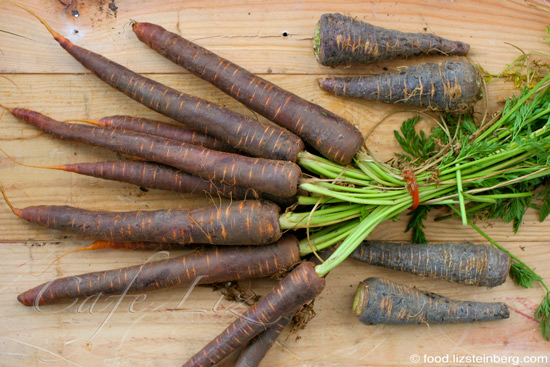
In the neighborhood's central market, you won't find purple carrots and the other gourmet oddities that appear in the markets of Tel Aviv. You will find all sorts of indigenous greens that feature in Arab cooking, including hubeizeh (mallow), olesh (chicory), mustard stems (apparently, you pickle them), green beet leaves, 10-centimeter-tall lentil sprouts and bags of cyclamen leaves for stuffing. Who knew you can eat cyclamen? Continue reading A culinary spin through Wadi Nisnas...

Bookmark and Share

Restaurant review: Lunch at Bat Shlomo’s Schwartzman dairy

December 22, 2009 at 2:00 pm | Tags: , , ,

Every so often, us city dwellers get a craving for a little bit of country, and go scouring the countryside for a place that meets our bucolic idyll.

One such place is the Schwartzman family dairy on Moshav Bat Shlomo, a few kilometers north of Zichron Yaakov. The dairy sits in an 100-year-old stone house on South Bat Shlomo’s only street (one street!). You walk beneath the canopy of trees and enter an unassuming yard full of bric-a-brac, clay pots, Hebron glass and a chicken coop. There you’ll find a small store, and a little seating area for the “restaurant.” Massive clusters of garlic hang everywhere.

As soon as we entered the store, we were bombarded with little slivers of cheese — taste the sfatit, taste the aged goat cheese, here’s a scoop of labaneh and one of yogurt. After all, you’re probably there for the cheese, because this is a dairy, after all, and cheese is the main thing on the restaurant menu. Continue reading Restaurant review: Lunch at Bat Shlomo’s Schwartzman dairy…

Bookmark and Share

Yemenite zhug

December 10, 2009 at 1:00 am | Tags: , , , , ,

zhug

Here I am, making zhug, even though I’ve never really been a big fan. Not liking something has never kept me from trying to make it myself.

Plus, I find something intrinsically interesting about making condiments. Things like mustard and mayonnaise, they’re usually considered ingredients in their own right, something you get ready-made. But that doesn’t mean you need to take them as a given; they, too, can be made.

Zhug (סחוג), also written skhug or schug, is a Yemenite condiment, one you usually find topping falafel or hummus, or smeared in sandwiches. None of these are things I regularly eat, but I’m loving my zhug as a red-hot, super quick seasoning for orange soups. Continue reading Yemenite zhug…

Bookmark and Share

Israeli breakfast — the best of brunch in Tel Aviv, and a mustard-blue cheese omelet

November 16, 2009 at 11:00 pm | Tags: , , , ,

brunch-brasserie

Brunch is beyond a tradition in Tel Aviv -- it's a culture. Every self-respecting restaurant offers a breakfast menu, which invariably includes "Israeli breakfast" -- generally speaking, some form of eggs, a leafy or chopped vegetable salad, assorted white cheeses, a few other spreads, some bread, coffee and/or fresh juice. The main variation is in the creativity of the spreads, the quality of the ingredients and the price.

(In the photo: Breakfast at the Brasserie. A review of my favorite brunch places is at the bottom of the post.)

Just how much is this a tradition? Everyone likes going out for breakfast, often in the early afternoon, but who prepares this at home? Well, we do, every weekend. Continue reading Israeli breakfast — the best of brunch in Tel Aviv, and a mustard-blue cheese omelet...

Bookmark and Share

Super-fresh hummus

August 5, 2009 at 1:00 am | Tags: , , , , ,

hummus

My friend Kazue is visiting from Japan, and her favorite food here just happens to be hummus. So I whipped up a batch or three. Hummus is quite possibly one of the simplest things to make, full of rich, creamy flavor — so long as you use fresh chickpeas. That canned stuff with the weird metallic aftertaste just isn’t as good.

This requires a bit of advance planning, and a lot of passive cooking time. The chickpeas soak overnight, and then cook slowly on the stove. But don’t worry, you don’t have to watch them too closely. And then you’re pretty much done — just drain the water, and whir the beans with some olive oil, tahini and salt. You’ll have the richest hummus you’ve ever tasted, on par with any of the hummus restaurants around here.

And if you want that sour, slightly rancid taste that characterizes hummus purchased at the supermarket, in absurdly small containers? Don’t worry, just leave it in the fridge for a week or two. Continue reading Super-fresh hummus…

Bookmark and Share

Do-it-yourself capers — a picking and pickling guide

June 21, 2009 at 1:00 am | Tags: , , , , ,

capers

We're used to seeing capers sold in little gourmet jars, and served in gourmet dishes at gourmet restaurants. Capers, it turns out, are a weed.

They grow wild around the Mediterranean, and Israel is no exception. Capers are referenced in the bible, and hung from the walls of Jerusalem over the centuries. In fact, apparently they're one of those plants that people have to pull out, because they're just that common. Continue reading Do-it-yourself capers — a picking and pickling guide...

Bookmark and Share

White asparagus comes to Israel

May 25, 2009 at 8:00 am | Tags: ,

white-asparagus

For the past few weeks I’ve been working on a side project, and it’s finally been published. The whole thing started after I noticed a few lonely bunches of white asparagus at the Carmel market, as if the sellers were testing the waters to see if anyone would buy. This was the first time I’d seen it fresh since we were in Italy last year. After encountering it again (and finally purchasing) at the Tel Aviv port farmer’s market, my curiosity was piqued: Until now, white asparagus was virtually impossible to find in Israel.

It turns out that’s going to change. As I found out (and as my article explains), the Agriculture Ministry is hoping to launch a program to teach farmers to grow white asparagus. This means that you can expect to see more of it in the comping years, and that you’ll be able to enjoy it for less than the cost of a trip to Europe. Exciting stuff.

So here you go: The PDF version and the JPEG of the newspaper page, and the online version (sadly, without the photos).

Asparagus recipes to follow in the coming days.

Bookmark and Share
Next Page »

All content and photos copyright 2008-2010, Liz Steinberg. All rights reserved. Please seek permission before republishing.
Powered by WordPress with theme based on Pool design by Borja Fernandez.
Entries and comments feeds. Valid XHTML and CSS. ^Top^